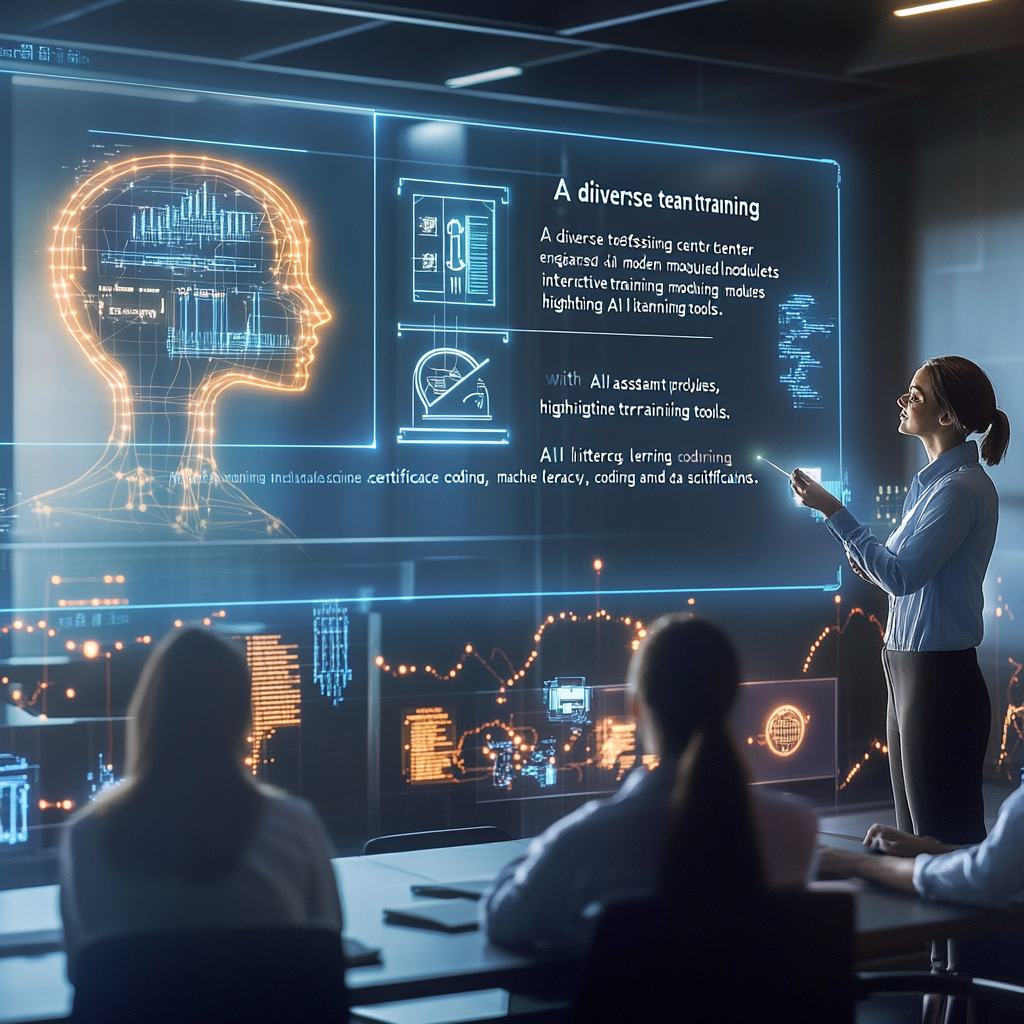
Developing AI Talent: A Strategic Approach to Upskilling
AI Success Depends on People, Not Just Technology AI is [...]
AI Success Depends on People, Not Just Technology
AI is rapidly transforming industries, yet one of the biggest barriers to AI adoption isn’t technology—it’s the talent gap.
70% of companies struggle with AI talent shortages, and over 80% of AI projects fail due to a lack of skilled personnel.
Many organizations focus on buying AI tools but fail to invest in workforce upskilling, leading to:
- AI models that go underutilized due to lack of employee training.
- AI initiatives that fail to scale beyond pilot projects.
- Resistance from employees who fear AI job displacement.
A strategic AI upskilling approach ensures that businesses can deploy, scale, and optimize AI—without disruption. In this guide, Blu outlines a structured framework for closing the AI talent gap and building an AI-ready workforce.
The 3 Key Areas of AI Talent Development
To future-proof their workforce, organizations need to focus on three core areas of AI upskilling:
1️⃣ AI Literacy for Leadership & Business Teams
Key Question: Do decision-makers and employees understand AI’s impact?
The Challenge: Many executives and non-technical teams lack a basic understanding of AI, leading to:
- Misaligned AI strategies that don’t support business goals.
- Employee resistance due to misconceptions about AI replacing jobs.
- Ineffective AI adoption, where teams don’t know how to leverage AI tools.
Upskilling Best Practices:
- Train executives & managers in AI strategy & governance.
- Educate employees on AI’s role in augmenting—not replacing—their work.
- Host AI literacy workshops to increase company-wide AI adoption.
Blu’s Approach: We offer AI education programs for leadership and business teams, ensuring AI strategies are well understood across all departments.
2️⃣ AI & Machine Learning (ML) Skills for Technical Teams
Key Question: Does your IT & data team have the skills to develop, deploy, and maintain AI?
The Challenge: AI is constantly evolving, and traditional IT teams often lack:
- Hands-on experience with AI/ML frameworks & cloud-based AI services.
- Expertise in data science, model training, and AI integration.
- Knowledge of AI compliance & security best practices.
Upskilling Best Practices:
- Provide AI engineering & ML model development training.
- Upskill teams in AI deployment on cloud platforms (AWS, Azure, GCP).
- Train IT teams on AI governance, risk management, and compliance.
Blu’s Approach: Our AI/ML training programs help technical teams master AI deployment, automation, and security best practices.
3️⃣ AI Change Management & Workforce Integration
Key Question: How do you ensure AI adoption is seamless across teams?
The Challenge: AI adoption often disrupts traditional workflows, and employees may resist AI-driven changes due to:
- Fear of job automation & displacement.
- Lack of AI tools that integrate smoothly into existing operations.
- No clear change management plan for AI adoption.
Upskilling Best Practices:
- Train employees on AI-enhanced workflows & automation tools.
- Build a culture of collaboration between AI and human workers.
- Establish AI change management teams to oversee AI integration.
🔹 Blu’s Approach: We help organizations create structured AI change management programs to ensure smooth workforce transitions.
A Step-By-Step Framework for AI Upskilling
Step 1: Conduct an AI Skills Gap Assessment
✔ Identify which teams need AI training and at what level.
✔ Map AI skill requirements based on business goals.
Step 2: Build a Multi-Level AI Training Program
✔ Develop AI literacy programs for executives & business teams.
✔ Provide technical AI training for data teams & IT professionals.
Step 3: Implement Hands-On AI Learning Initiatives
✔ Use real-world AI case studies & project-based training.
✔ Encourage cross-functional collaboration between AI & business teams.
Step 4: Foster a Culture of Continuous AI Learning
✔ Provide ongoing AI education & certification opportunities.
✔ Encourage employees to experiment with AI tools in their daily workflows.
Step 5: Track AI Upskilling Success & Adjust Training Programs
✔ Measure AI adoption rates & employee engagement with AI tools.
✔ Continuously refine AI training based on emerging trends.
Final Thoughts: AI Upskilling is a Competitive Advantage
AI is not just a technology investment—it’s a workforce transformation. The companies that train and upskill employees in AI will:
✅ Increase AI adoption rates and maximize AI ROI.
✅ Reduce employee resistance by fostering AI literacy.
✅ Ensure long-term AI success by developing in-house AI expertise.
At Blu, we help enterprises develop AI upskilling strategies that empower employees, drive innovation, and ensure AI adoption is seamless.
Want to upskill your workforce for AI success? Let’s talk.
Share this article
Follow us
A quick overview of the topics covered in this article.
Latest articles

April 29, 2025
April 22, 2025
April 9, 2025